

Soil Moisture Monitoring for Improved Agricultural Productivity

Pakistan is widely recognized as an agrarian economy, with agriculture contributing approximately 18.9% to the national GDP and employing over 49% of the labor force. Despite its centrality, the sector continues to struggle with rigid and outdated practices, resulting in low crop yields, rising input and production costs, and inefficient use of critical resources.
One of the most pressing challenges is the lack of reliable, real-time data on water usage. For a country already facing a severe water crisis, this gap is particularly alarming. Efficient irrigation is fundamental to agricultural productivity: over-irrigation can restrict root growth and lead to waterlogging, while under-irrigation places crops under stress, hampering their development. Moreover, excessive water use increases the risk of seepage into groundwater, potentially contributing to contamination and associated health hazards.
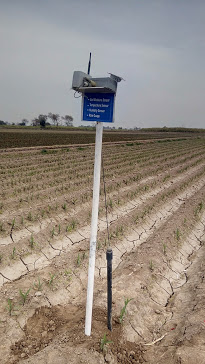
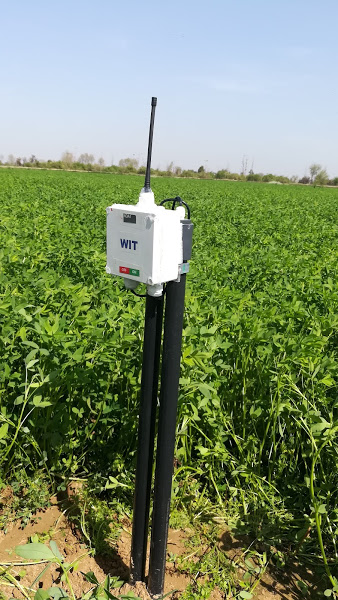
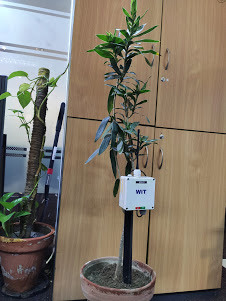
To address these challenges and modernize Pakistan’s agricultural landscape, the Center for Water Informatics and Technology (WIT) at Lahore University of Management Sciences (LUMS) has introduced soil moisture sensors. This innovative technology provides automated, data-driven alerts indicating optimal irrigation times, enabling farmers to apply water precisely when needed. By maintaining crop-specific optimal moisture levels in the root zone, these sensors not only conserve water but also enhance crop productivity and quality.
Additionally, the sensors are designed with long battery life, allowing for continuous, year-long operation with minimal human intervention. Early results are promising: sugarcane farmers using these sensors have reported up to a 35% reduction in irrigation costs, alongside noticeable improvements in crop quality.
This initiative represents a significant step toward data-driven, sustainable agriculture in Pakistan, addressing both water scarcity and productivity challenges through practical technological innovation.
Soil Moisture Sensor: Development & Specifications
Learn more about the development and specifications of the Soil Moisture Sensor here, including its design process, technical features, and applications in agricultural monitoring.
Publications on Soil Moisture Sensor:
- M. Ahmad, H. Rafique and A. Muhammad, "Exploring the Application of Machine Learning for Soil Moisture Forecasting over In-situ Soil Moisture Sensors Network," 2024 Horizons of Information Technology and Engineering (HITE), Lahore, Pakistan, 2024, pp. 1-5.
- H. Rafique, R. Zainab, Z. Ahmad and A. Muhammad, "A Quality Assured in-situ Real-Time Soil Moisture Monitoring Network for the Indus Basin," IGARSS 2024 - 2024 IEEE International Geoscience and Remote Sensing Symposium, Athens, Greece, 2024, pp. 5155-5161
Soil Moisture Sensors: Workshops, Conferences, and Meetings
- Workshop on Digital Sustainable Agriculture.
- WIT LUMS Hosts the Launch of Nestle Pakistan Water Plan.
Related News & Research Stories on Soil Moisture Sensor:
1- Soil Moisture Monitoring for Improved Agricultural Productivity
2- Revolutionizing Water Management Through Artificial Intelligence
Soil Moisture Sensor Development Team:
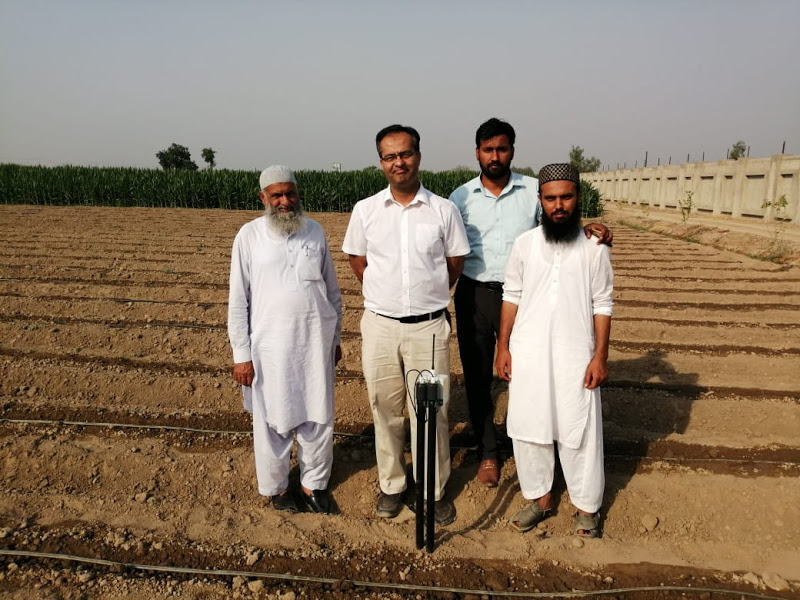
Soil Moisture Sensors (SMS) are indigenously produced at WIT’s production laboratory. The facility has dedicated staff responsible for development, field deployment, and maintenance. Prior to deployment, each SMS undergoes rigorous testing under laboratory conditions, followed by a thorough calibration process. Once validated, the sensors are deployed in the field.
Data transmitted from the SMS units is continuously monitored through a centralized dashboard, and the sensors are maintained through field visits whenever required.
Gallery of Soil Moisture Sensor Deployment Sites