


Reading Circle II- Fall 2026 | Values in Systems Thinking
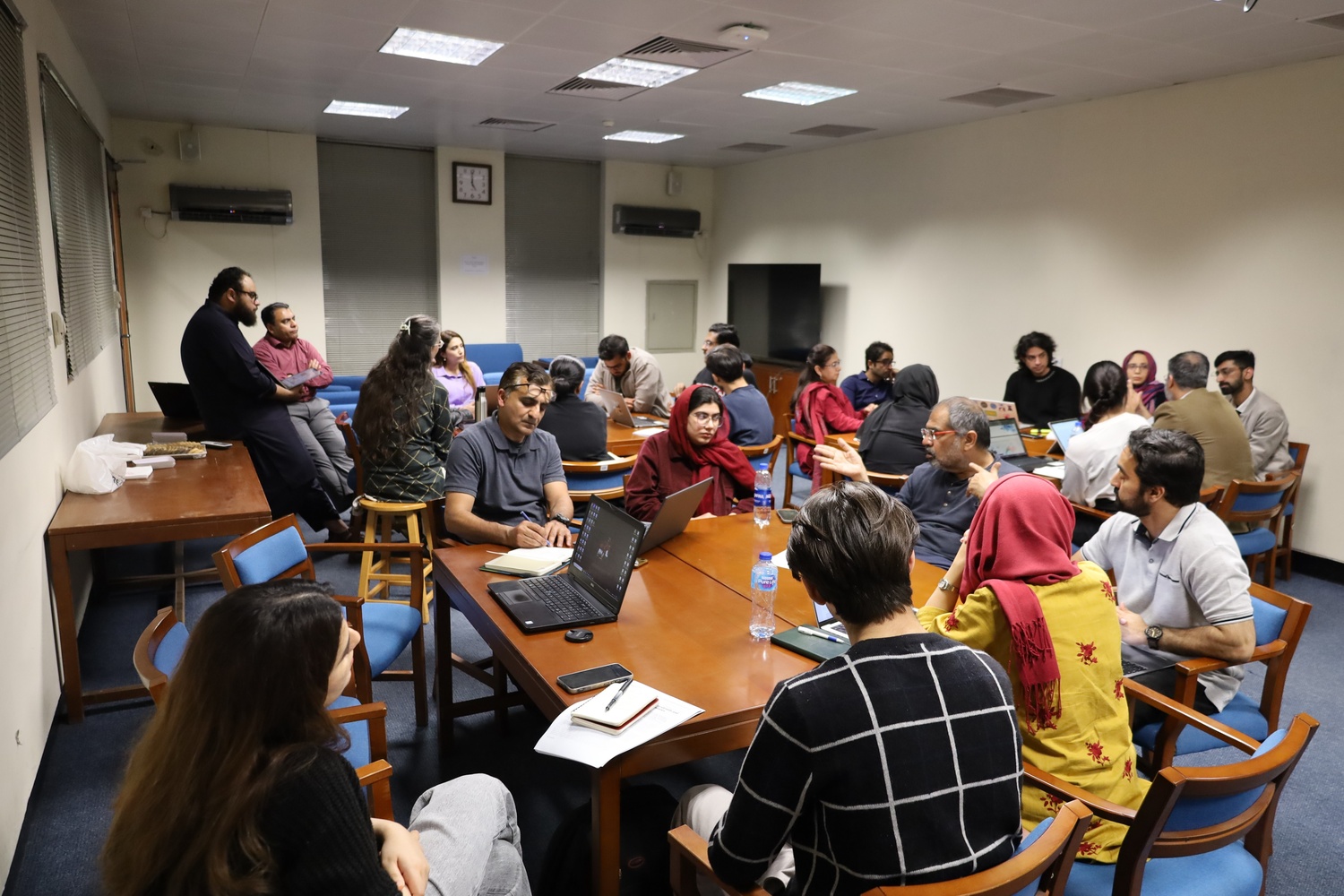
The Centre for Water Informatics and Technology (WIT) is convening a second fishbowl-style Reading Circle in Fall 2026, continuing the series begun in Spring 2026 with Justice in Systems Analysis. Where the first circle examined how equity, vulnerability, and responsibility shape outcomes across energy, water, agriculture, and health systems, this second circle turns the lens onto the practice of analysis itself.
Systems analysis shapes what futures societies believe are available to them. It does so through decisions that are seldom argued in public: how a problem is framed, what is counted as progress, what is assumed to drive human behaviour, whose picture of the future enters the work, and what authority the resulting numbers claim. Different traditions such as economic, legal, customary, and religious answer them in ways that do not always reconcile, and analysis rarely makes visible which answer it has adopted.
The circle intends to take up drivers of change that lie beyond price and income obligations, customs, beliefs, and social norms, and asks what role these play in systems we routinely represent through techno-economic relationships alone.
The sessions will consist of six 90-minute sessions, held bi-monthly. Each session centres on a shared reading and a facilitated discussion. Students, researchers, and practitioners from all disciplines are welcome. Beyond the formal meetings, the initiative aims to sustain an interdisciplinary community for continued dialogue and resource sharing.
Session Themes
1. Stewardship, Responsibility, and What We Owe
Every analysis begins with choices about what matters and what may be set aside. Where do those choices come from, and who is accountable for them?
Analysis is always conducted on behalf of people who are not in the room, and often on behalf of people not yet born. The opening session establishes the argument and the judgements embedded in problem definition, the obligations that follow from analytical authority, and the difficulty of being accountable for choices made long before results appear.
Suggested readings:
- Saltelli, A., et al. (2020). Five ways to ensure that models serve society: A manifesto. Nature, 582(7813), 482–484. https://doi.org/10.1038/d41586-020-01812-9
- Jasanoff, S. Technologies of Humility: Citizen Participation in Governing Science. Minerva 41, 223–244 (2003). https://doi.org/10.1023/A:1025557512320
2. Progress, Wellbeing, and the Metrics We Choose
Objectives and indicators decide what a system is optimised for. What do income, health, and decent living each make visible, and what falls outside the frame entirely?
Gross Domestic Product (GDP) was designed for a narrow accounting purpose and subsequently came to stand for social progress. As an example, the disability-adjusted life year reshaped global health priorities more decisively than argument did. Decent living standards also offer a way to look beyond economic growth. The metrics can help to define what a good life requires, and each redirects resources accordingly.
Suggested readings:
- Costanza, R., Kubiszewski, I., Giovannini, E. et al. Development: Time to leave GDP behind. Nature 505, 283–285 (2014). https://doi.org/10.1038/505283a
- Rao, N.D., Min, J. Decent Living Standards: Material Prerequisites for Human Wellbeing. Soc Indic Res 138, 225–244 (2018). https://doi.org/10.1007/s11205-017-1650-0
3. Norms, Faith, and the Drivers of Behaviour
Demand and human consumption patterns are usually understood as responses to price and income, yet much resource behaviour is driven by obligation, custom, and belief. What moves people when the price signal does not?
Water and electricity demand in Pakistan shifts predictably during Ramadan without any change in tariff. Religious endowments financed and maintained water infrastructure for centuries under rules that had nothing to do with cost recovery. Customary allocation systems govern irrigation in the absence of formal law. This session treats these as drivers to be examined comparatively alongside price, rather than as the cultural background to the real analysis.
Suggested readings:
- Kuran, T. (2001). The provision of public goods under Islamic law: Origins, impact, and limitations of the waqf system. Law & Society Review, 35(4), 841–898.
- Wescoat, J. L., Jr. (1995). The "right of thirst" for animals in Islamic law: A comparative approach. Environment and Planning D: Society and Space, 13(6), 637–654.
- Brand-Correa, L. I., & Steinberger, J. K. (2017). A framework for decoupling human need satisfaction from energy use. Ecological Economics, 141, 43–52.
4. Futures, Imagination, and Plural Pathways
The futures we analyse are written by someone, somewhere else, under particular assumptions. Who decides which futures are worth describing, and what happens to the ones nobody writes down?
The set of futures available to analysis is small, authored by few, and remarkably convergent. This session examines how that set came to be, what participation in its construction actually costs, and whether alternatives excluded early can be recovered later.
Suggested readings:
- Beck, S., & Mahony, M. (2018). The IPCC and the new map of science and politics. WIREs Climate Change, 9(6), e547.
- Turnhout, E., Metze, T., Wyborn, C., Klenk, N., & Louder, E. (2020). The politics of co-production: Participation, power, and transformation. Current Opinion in Environmental Sustainability, 42, 15–21.
5. AI, Automation, and the Practice of Analysis
AI is shaping how analysis is produced and how quickly. What genuinely changes in the knowledge we make, and what assumptions carry over untouched?
Machine learning systems encode values through the same mechanisms as any other analytical instrument: through what is optimised, what is measured, and what is left out. As generative tools enter modelling workflows, the question is which parts of analytical judgement are being automated, and whether accountability travels with them.
Suggested readings:
Birhane, A., Kalluri, P., Card, D., Agnew, W., Dotan, R., & Bao, M. (2022). The values encoded in machine learning research. Proceedings of the 2022 ACM Conference on Fairness, Accountability, and Transparency, 173–184.
Bender, E. M., Gebru, T., McMillan-Major, A., & Shmitchell, S. (2021). On the dangers of stochastic parrots: Can language models be too big? Proceedings of the 2021 ACM Conference on Fairness, Accountability, and Transparency, 610–623.
6. Authority, Responsibility, and the Analyst
Numbers carry authority that arguments do not. What do our results legitimate, what do they quietly rule out, and what do we owe those who live with the consequences?
Quantification is a form of authority, historically adopted where trust in personal judgement was weakest. The closing session asks what our own results legitimate, what they foreclose, and what obligations follow. The session, and the circle, ends with a short collective statement of practice.
Suggested readings:
- Porter, T. M. (1995). Trust in numbers: The pursuit of objectivity in science and public life (Chapters 1 and 8). Princeton University Press.
- Pfenninger, S., DeCarolis, J., Hirth, L., Quoilin, S., & Staffell, I. (2017). The importance of open data and software: Is energy research lagging behind? Energy Policy, 101, 211–215.



