


Dr. Talha Manzoor Delivers Lecture on Intelligent Control of Complex Water Systems to RISE Interns
Share


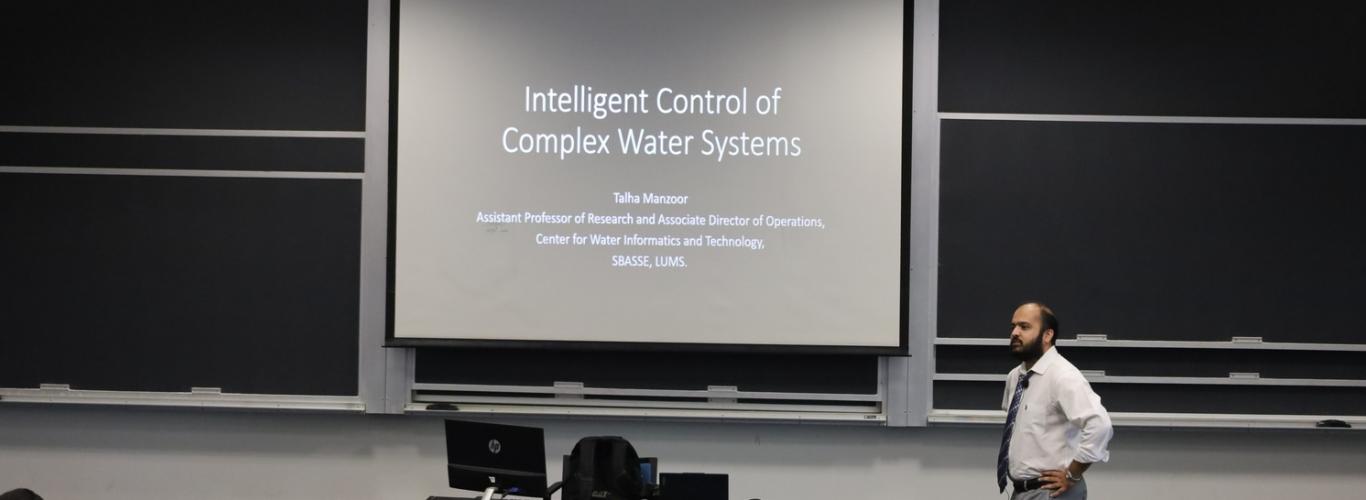
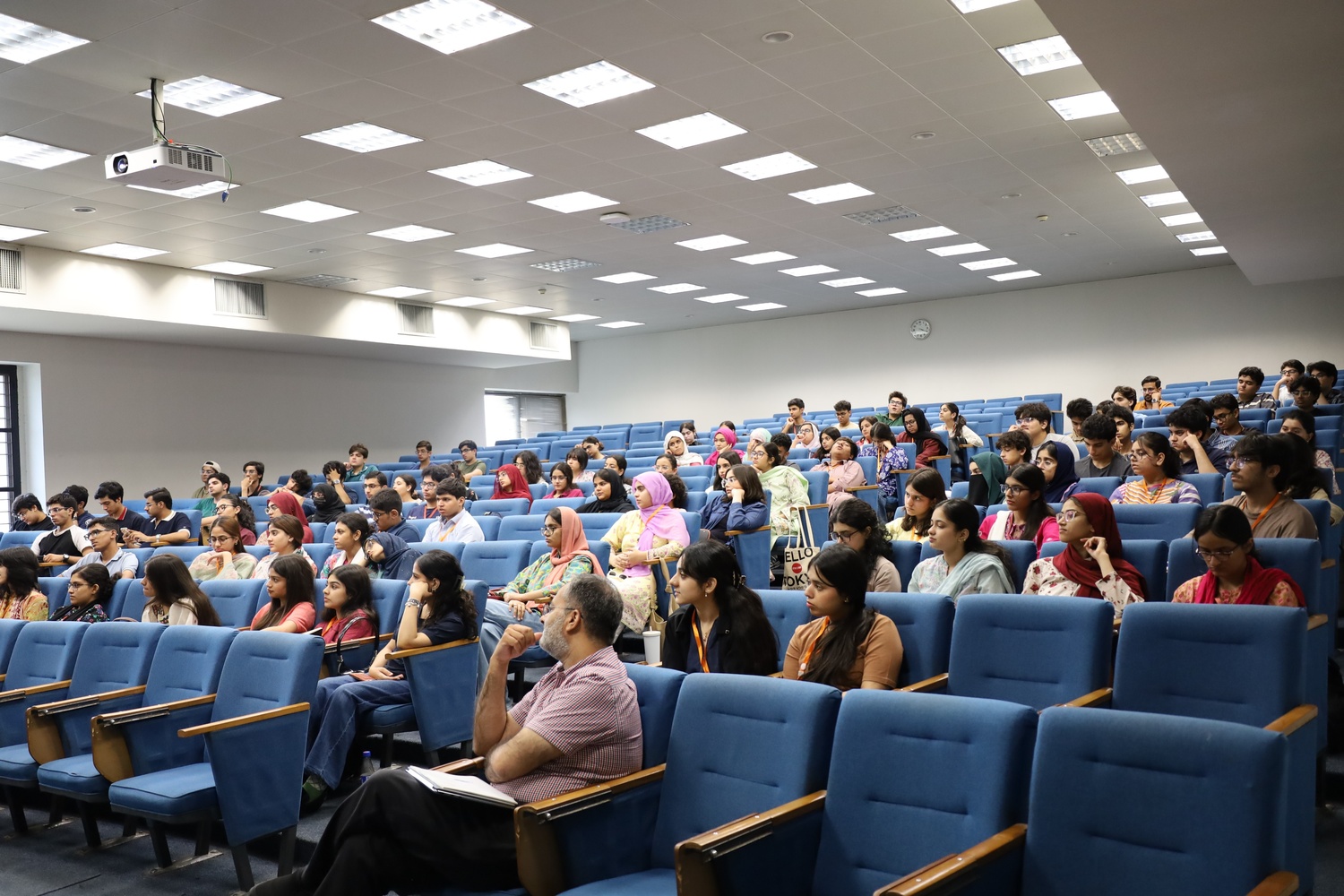
On June 30, Dr. Talha Manzoor delivered a lecture on "Intelligent Control of Complex Water Systems" to interns participating in this year's Research Internships in Science and Engineering (RISE) program at the Syed Babar Ali School of Science and Engineering (SBASSE), LUMS.
Dr. Talha began by introducing the concept of water systems and explaining why they are inherently complex. He described water systems as coupled human-natural systems, integrated social and ecological systems in which human activities and natural processes continuously influence one another. He emphasized that effective management of such systems requires an understanding of both their environmental and societal dimensions.
To explain how complex water systems can be managed, Dr. Talha introduced the Sense–Decide–Act framework. He explained that intelligent control begins with sensing and identifying a problem, followed by informed decision-making based on available data, and finally implementing appropriate actions to address the issue. This framework, he noted, forms the basis of modern water systems management and decision support.
Discussing socio-economic droughts and the role of human activities in exacerbating water challenges, Dr. Talha highlighted the Centre for Water Informatics and Technology's research in Namal Valley, Mianwali. He explained that Namal Dam, which is primarily fed by rainfall through unstructured catchments, has experienced declining water availability due to changing rainfall patterns and reduced storage capacity over time. These challenges have intensified competing demands among stakeholders, including farmers, fishers, irrigation authorities, and local communities. At the same time, excessive rainfall can also lead to flooding, creating an additional layer of complexity in water management. As part of an experimental intervention, the WIT team developed and employed a simulation game to better understand stakeholder decision-making and conflict resolution in water-scarce conditions at Namal Dam.
Dr. Talha also introduced the interns to the diverse research areas being pursued at the Centre for Water Informatics and Technology (WIT). He discussed ongoing work on improving agricultural water-use efficiency, strengthening resilience against hydro-disasters and climate shocks, and promoting equitable access to water through advanced data collection, analysis, and information dissemination. He further highlighted several ongoing projects across Pakistan and demonstrated how indigenous sensing technologies developed by the WIT Lab are enhancing real-time data collection and supporting evidence-based decision-making.
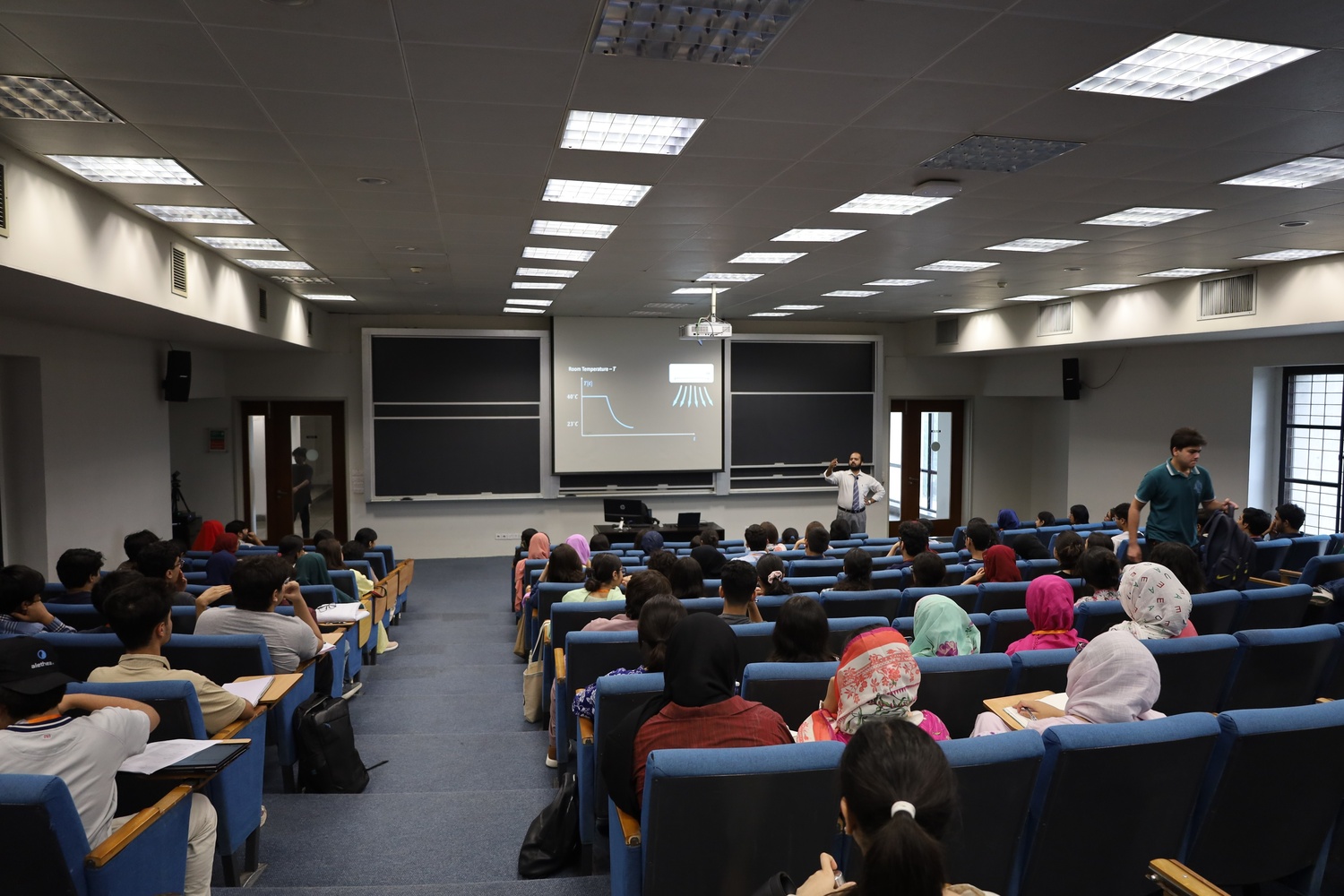
The lecture concluded with an engaging question-and-answer session, during which interns interacted with Dr. Talha and discussed the technical, social, and policy dimensions of water resource management.

Connect


