


SMALLPAK: A New European–Pakistani Partnership to Strengthen Smallholder Farmers
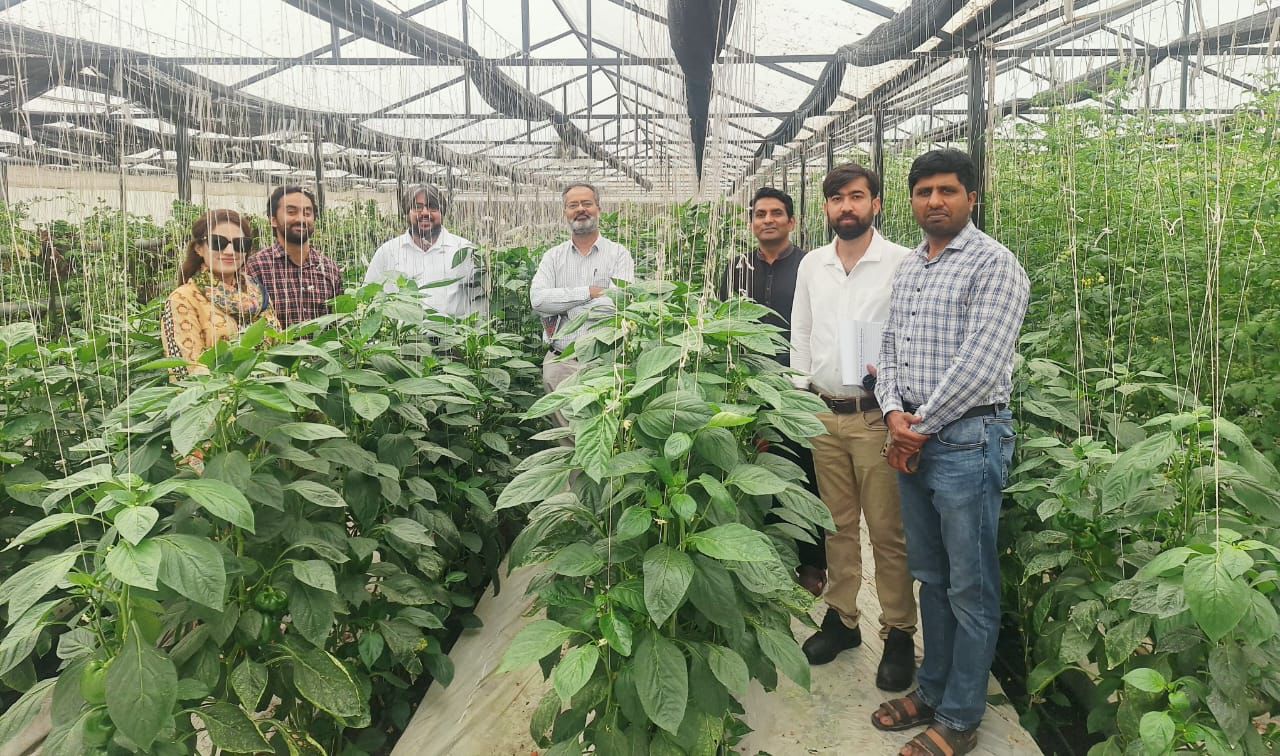
The Centre for Water Informatics and Technology at LUMS (WIT) has secured a major European-funded research project focused on advancing digital innovations for smallholder farm production. Titled Innovations for Resilient Smallholder Production Systems in Punjab, Pakistan, the project is funded by Germany’s Federal Ministry of Agriculture, Food and Regional Identity (BMLEH) through the Federal Office for Agriculture and Food (BLE), one of the key agencies responsible for implementing national agricultural policies. This initiative brings together leading institutions from Pakistan and Europe, including Eberswalde University for Sustainable Development (HNEE), the University of Hildesheim, Muhammad Nawaz Shareef University of Agriculture (MNSUA), and WIT at LUMS.
In Pakistan, the vast majority of agricultural producers are small landowners whose resilience and long-term productivity are critical for national food security. Yet, they have historically remained disconnected from mainstream agricultural policymaking. Focusing on Punjab, this research project will explore how smallholders’ productivity can be enhanced in a socially responsive and ecologically sustainable manner. To achieve this, the project identifies, evaluates, and develops innovative approaches that blend indigenous knowledge with cutting-edge technologies.
The work is structured around three core themes:
- Local innovations that promote multifunctional, integrated, and resilient production systems.
- Technological and digital solutions that help small farmers improve productivity and better adapt to climate impacts.
- Organizational innovations that expand access to markets, inputs, and knowledge through new forms of social and economic collaboration.
One of the most notable strengths of the SMALLPAK project is its commitment to participatory engagement. By involving both policymakers and smallholder farmers in research and project design, it ensures that interventions are grounded in on-the-ground realities while remaining aligned with institutional priorities. This integrated approach helps bridge the persistent gap between field-level challenges and policy-level decision-making, leading to more practical, scalable, and sustainable outcomes. It also brings long-overdue attention to smallholder farmers, placing their needs and insights back at the center of Pakistan’s agricultural policy agenda.
In a nutshell, the SMALLPAK project places Pakistan’s smallholder farmers at the center of policy debates and agricultural transformation. By integrating their knowledge, challenges, and aspirations into research and decision-making and by pairing them with new technologies and innovative practices, the project aims to empower country’s smallholder farmers.



